Git: Push it! (real good)
After wrestling with some git-remote-branching-merge-problems⦠I remembered this songā¦
If youāre using git, you might add this to your [alias] section in
.gitconfig.
(notice the up-on-this alias)
After wrestling with some git-remote-branching-merge-problems⦠I remembered this songā¦
If youāre using git, you might add this to your [alias] section in
.gitconfig.
(notice the up-on-this alias)
Do you find yourself copying and pasting the same code from Rails application-to-application as new projects start? Our team has a handful of projects in development right now and we notice that some of these reusable components tend to get out of sync when we bounce between projects. So, weāre making an effort to spot these and are creating a handful of plugins so that we can keep them updated between projects. (Iām sure that a lot of you do this as well)
In an effort to share some of our patterns, weāll try to release them into the wild for others to use and perhaps if you have better patterns to offer, weāre always interested in improving our approach.
Over the years, our designers and developers have approached the management of flash messages several different ways. In Rails, the default way to add something to a flash message is to do something like this in your controller.
flash[:message] = āYou have successfully signed in to your account.ā\
What we began doing a while back is to create a few controller helper methods:
add_message( āYou have successfully signed in to your account.ā )
add_notice( āYouāve Got Mail!ā )
add_error( āOops! Something got fucked up!ā )\
Really, nothing too crazy here, just a pattern that our developers have preferred to managing our applicationās flash messages.
Okay, so now for the part of the puzzle that we aimed to make consistent across our projects. Rendering flash messages would usually result in several lines of conditionals in our application layout to check if the flash had any values assigned to it. As we worked with our HTML/CSS designers to define a consistent pattern, we moved our code into a helper for rendering flash messages.
With Flash Message Conductor, we just need to pop in the following into our application layout.
<%= render_flash_messages %>\
If we had called add_message, itād render the following:
::: {#flash_messages} You have successfully done XYZ⦠:::
Or, should you have called add_error, itād render the following:
::: {#flash_messages} Oops! Something went bonkers! :::
What weāve done here is defined a consistent pattern for our designers
and developers to follow. Weāll always have a div container that will
use a p tag to display the flash messages with a CSS class value that
maps to the type of flash message that weāre displaying. This makes it
easier for us to reuse the same flash message styling (and tweak if
necessary), but we know that itāll produce the same HTML across our
applications.
Like most modern Rails applications, you can install with:
I was going through an older project of ours and cleaning up some specs and noticed how often we were doing the same thing in several places. When we started the project, we didnāt get the benefits of shared groups. Now that we have some time to go through and update some of our older specs, Iāve been trying to take advantage of the features currently available in RSpec. One feature that I havenāt seen a lot of mention of by people is shared groups, so I thought Iād take a few minutes to write up a quick intro to using it.
To pick some low-hanging fruit, letās take an all-too-familiar method,
which you might be familiar with⦠login_required. Sound familiar?
Have you found yourself stubbing login_required over and over
throughout your specs?
describe Admin::DohickiesController, āindexā do
before( :each ) do
controller.stub!( :login_required )
Dohicky.should_receive( :paginate ).and_return( Array.new )
get :index
end
ā¦
end\
If youāre requiring that a user should be logged in when interacting
with most of the application (as in the case of an administration
section/namespace), you might want to consolidate some of your work into
one shared specification group. The basic premise behind this is that
you can write a typical describe block and load it into any other spec
groups that you need. For example, in our case, weāll need to stub
login_required in several places. We can set this up in one shared
group and reference it wherever necessary.
For example, here is what weāll start off with.
describe āan admin user is signed inā do
before( :each ) do
controller.stub!( :login_required )
end
end
describe Admin::DohickiesController, āindexā do
ā¦\
However, the new describe block isnāt accessible from the block at the
bottom of the example⦠yet. To do this, we just need to pass the
option: :shared => true as youāll see in the following example.
describe āan admin user is signed inā, :shared => true do
before( :each ) do
controller.stub!( :login_required )
end
end\
Great, now we can reference it by referring to it with:
it_should_behave_like SharedGroupName. In our example above, this
would look like:
describe āan admin user is signed inā do
before( :each ) do
controller.stub!( :login_required )
end
end
describe Admin::DohickiesController, āindexā do
it_should_behave_like āan admin user is signed inā
before( :each ) do
Dohicky.should_receive( :paginate ).and_return( Array.new )
get :index
end
ā¦
end
describe Admin::DohickiesController, ānewā do
it_should_behave_like āan admin user is signed inā
before( :each ) do
dohicky = mock_model( Dohicky ) Dohicky.should_receive( :new ).and_return( dohicky
)
get :new
end
ā¦\
Thatās it! Pretty simple, eh? We can now reference this shared group in
any describe blocks that we want to. A benefit to this approach is that
we can make change the authentication system (say, we decide to switch
it entirely and/or even just change method names, set any other
prerequisites necessary when an admin is signed in), weāll have a single
place to change in our specs. (tip: you can put these in your
spec_helper file)
You can learn more about it_should_behave_like and other helpful
features on the RSpec documentation
site.
If you have any suggestions on better ways of handling things like this, please follow up and share your solutions. Iām always looking to sharpen my tools. :-)
In response, Bryan Helmkamp suggests that a
better solution is to define a method in our specs like, for example:
build_mock_user_and_login. then calling it in our before(:each). So,
maybe the approach above isnāt the most ideal method but I did wantt o
draw some attention to it_should_behave_like. I suppose that I need a
better example.. another post, perhaps? :-)
Also, Ed Spencer has posted an article titled, DRYing up your CRUD
controller
RSpecs,
which will introduce you mor to it_should_behave_like.
Thanks for feedback people!
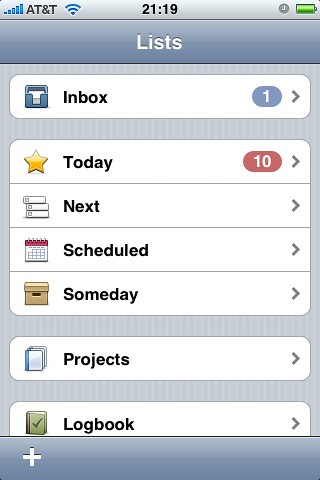
Awesome. Things 1.1 for the iPhone was just pushed to the Apple iTunes Store, which means⦠I can finally sync my Things.app with my iPhone!

Iāve been using Things for quite a while to manage my life (work and personal) and bringing this to my phone definitely makes my day.

For more information about Things, visit the following sites:
(iPhone)
Iāll post a review in the coming days as I get a chance to play with it. Just wanted to share the news. :-)
Alan Cooper, author of About Face, has slides from his presentation at Agile 2008 online.
If anybody knows if there is video of this talk, please let me know. :-)
Here are a few skitches from the slideshow.
::: thumbnail
:::
If youāre in the market for a new hosting provider for your Ruby on Rails application, you might take a look at the new options for Rails Boxcar. We recently expanded our service offerings into three pricing tiers as well as custom packages for those who need a bit more.

A few things that weāve recently added support for:
The best part is that we can get you up and running with a new Boxcar now for as low as $59/month USD.
For more information, visit: http://railsboxcar.com
If you have any questions, donāt hesitate to contact us.
Itās been quiet because Iāve been busy over the past few months. Projects, vacations, and pair programming with our new developer, Nigel. ;-)
In other news, Chris and I launched http://ohmyscience.org (on twitter) in an effort to get a small one-night micro-project out the door.
I have a growing list of a few micro-projects that I hope to be helping get developed and launched before the summer is over. Stay tuned!
I hope that youāre all enjoying your summer!
After noticing a few patch requests on Rubyforge.. I decided that Iād put the ShortURL gem up on GitHub as I spend quite a bit of my time there these days. :-)
Iāve also thrown up a few lines of code so that you can get the gist of the gem. ;-)
It appears that MacPorts has upgraded to Ruby 1.8.7, which is good news if youāre running Rails 2.1⦠but if you have an older Rails application⦠itās not going to work too well.
In order to get Ruby 1.8.6 installed with the latest MacPorts, youāll need to do the following.
Kudos to the 37signals team for launching what looks like a nice way to get the word out about their products.
Iāve been using Basecamp for three years and itās been a great tool for collaborating with our clients.
{border=ā0ā
height=ā250ā
width=ā300ā}
Disclaimer: This is my get-rich-quick scheme for the day.
Yesterday we announced our new suite of plans for Rails Boxcar. You can now get started with a pre-configured VPS designed by Rails developers like you for as low as $59/month.
You can check out our new rates here:
If youāre at RailsConf, be sure to introduce yourself and ask for details. :-)
If youāre coming to Portland for RailsConf or CabooseConf, be sure to introduce yourself (and weāll try to do the same). A few of us from Planet Argon will be attending the conference. I thought that Iād make it easy to spot us by putting some faces to our names.
In corner #1 we have Alex Malinovich who is our Director of Deployment Services. If you have any questions about hosting options, deployment tips, and scaling your Ruby on Rails application.. be sure to tug on his shoulder. I also overheard that heāll be giving people discounts on our Boxcar products to those he meets in person.
Alex Malinovich, Director of Deployment Services
In corner #2, we have Andy Delcambre who is on our development team. You might remember Andy from his series of blog posts/tutorials on using Git and getting Basecamp RSS feeds working in Google Reader via a Mongrel-based proxy (our team is still using this approach using this after ten months!).
Andy Delcambre, Software Developer
In corner #3, we have Gary Blessington who has been leading our design and development team. If youāre looking for a job working with Ruby on Rails, be sure to introduce yourself to Gary as heās hoping to meet up with several applicants who will be in Portland this week.
Gary Blessington, Director of Design and Development
In corner #4⦠is me. Iām not doing any talks this year so I plan to do wander around stress-free as Iām not finishing my slides at the last minute or preparing for panel talks. Iām happy to field questions and exchange stories with you. :-)
We are hiring. so feel free to introduce yourself to any of the faces above.
ā¦and most importantly, I hope you have a great time in Portland!